
Lake in the Hills Lookup Sources
No single public roll lists everyone in Lake in the Hills. A useful resident lookup selects the official record that fits the question, then checks its result against a second source. Property records identify an owner of record. Court records identify parties and events in a case. Vital records confirm a family event only when access rules permit it. Voter tools are built for self-verification, not open browsing. Business and license systems show an affiliation, not a home.
| Official record | Fact it can support | Custodian or portal | How access works |
|---|---|---|---|
| Parcel assessment | Owner, PIN, situs, mailing address, sale and legal-description context | McHenry County Athena | Public viewer; an owner is not proof of an occupant |
| Recorded instrument | Grantor, grantee, date, document and land description | McHenry County Recorder | Online index, paid interfaces, office and copy routes |
| Voter registration | One person's own status and precinct-style details | Illinois voter lookup | Self-match only; central files are restricted |
| Court case | Party, case number, type, filing date, docket and disposition | 22nd Judicial Circuit | Public index and clerk copies, with sealed and restricted files excluded |
| Vital or obituary record | Birth, marriage, death, family and date clues | County Clerk, IDPH, AAPLD | Certified access is limited; historic and obituary routes vary |
| Business or credential | Entity role, registered office, commission or license status | Illinois SOS, IDFPR, ISBE | Public affiliation lookup; not residence proof |
Start with the strongest known fact. An address points to Athena. A case number points to the Circuit Clerk. A school year points to the Algonquin Area Public Library District collections. A business name points to the Illinois Secretary of State. Record the exact name, date, role, PIN or case number shown. That small source log prevents two Lake in the Hills residents with similar names from being merged.
Match a Lake in the Hills Clue
A name alone is weak. For a sound Lake in the Hills resident lookup, normalize middle names, initials, maiden names, suffixes, punctuation, and former surnames. Search estate, trust, and company forms only when the record calls for them. Then require two anchors, such as the same PIN and deed party, a case party and known date, or an obituary date and family names.
- Write down the full name, known address, rough year, relative, school, business, or case clue.
- Choose the custodian whose record was made for that fact. Do not make a tax record answer a court question.
- Save the role and date. Owner, voter, permit applicant, court party, and registered agent mean different things.
- Confirm the match in another independent index before treating it as the same person.
- Ask the custodian to correct a bad official record through its own correction process.
The location label matters too. Lake in the Hills is a village in McHenry County, while Woodstock is the county seat. County files may be the right source even when the village name is absent from an office title.
Confirming Lake in the Hills Court Names
The McHenry County Case Information portal is a lead for cases in Illinois' 22nd Judicial Circuit. The official i2File guidance supports a location and exact case-number search, or a party search using first name, last name, and optional case type. Categories include family, probate, law, municipal, small claims, adoption, dissolution, mental health, and orders of protection. The live interface is dynamic, so current labels should be checked at search time.
| Search or result field | How it helps identify the record |
|---|---|
| Location | Limits the search to the selected court location |
| Case number | Opens a known case more safely than a broad name search |
| First and last name | Finds party-name variants when no case number is known |
| Category and case type | Narrows results to the relevant court matter |
| Title, filing date and filing type | Separates same-name results before a copy request |
| Party, judge, event and document links | Shows docket activity subject to public-access limits |
A court hit does not prove present residence, guilt, or the truth of an allegation. Adoption, juvenile, sealed, expunged, mental-health, and impounded material can be unavailable. For a file copy, the Circuit Clerk request route asks for the case number, parties, document title, file date, contact details, and whether certification is needed. Public terminals and clerk staff provide fallback access at the courthouse.
Reading a McHenry Docket Result
A case result is an index to a court file. The representative McHenry inventory can include a case title and number, filing date and category, assigned judge, parties and attorneys, scheduled events, dispositions, and document links. Criminal or traffic records may add a charge status, statute, offense date, plea or disposition, ticket, sentence, judgment, bond, warrant, or summons fields. Some personal fields are restricted even when the case itself is public.
- Docket
- The dated list of events, filings, hearings, and rulings in one court case.
- Index versus image
- An index names and describes a record; an image is the scanned or electronic document itself.
- Certified copy
- A custodian-issued copy formally attested as a true copy of the office record.
- Disposition
- The recorded outcome of a charge or issue, which is not the same as an allegation or arrest.
Copy charges documented by the clerk are $2 for the first page, 50 cents for pages two through twenty, 25 cents for later pages, and $6 for certification. A $6 search fee may apply when identifying facts are missing. Fees and access should be confirmed before ordering.
Lake in the Hills Safety Lookups
The McHenry County Sheriff corrections page provides the official current adult inmate search and reports hourly updates, plus a limited recent-release view. It excludes federal and juvenile custody. The page below shows the local custodian's search route.
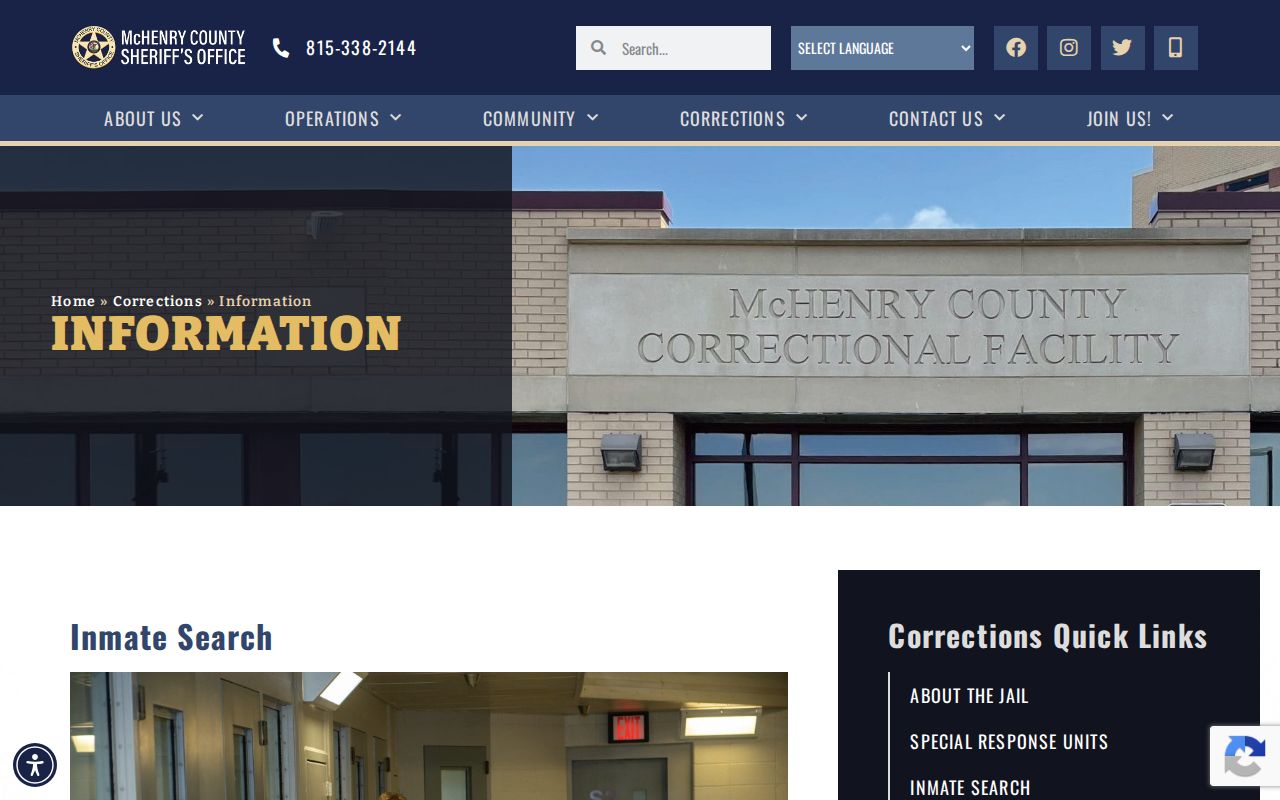
Custody status is time-bound. A current or recent result must be read with its update time and should not be stretched into a claim about a person's home.
The Illinois State Police Sex Offender Registry is a separate state source with name, birth-date, city, ZIP, county, status, and map or radius paths. Its legal notice governs use of the registry.
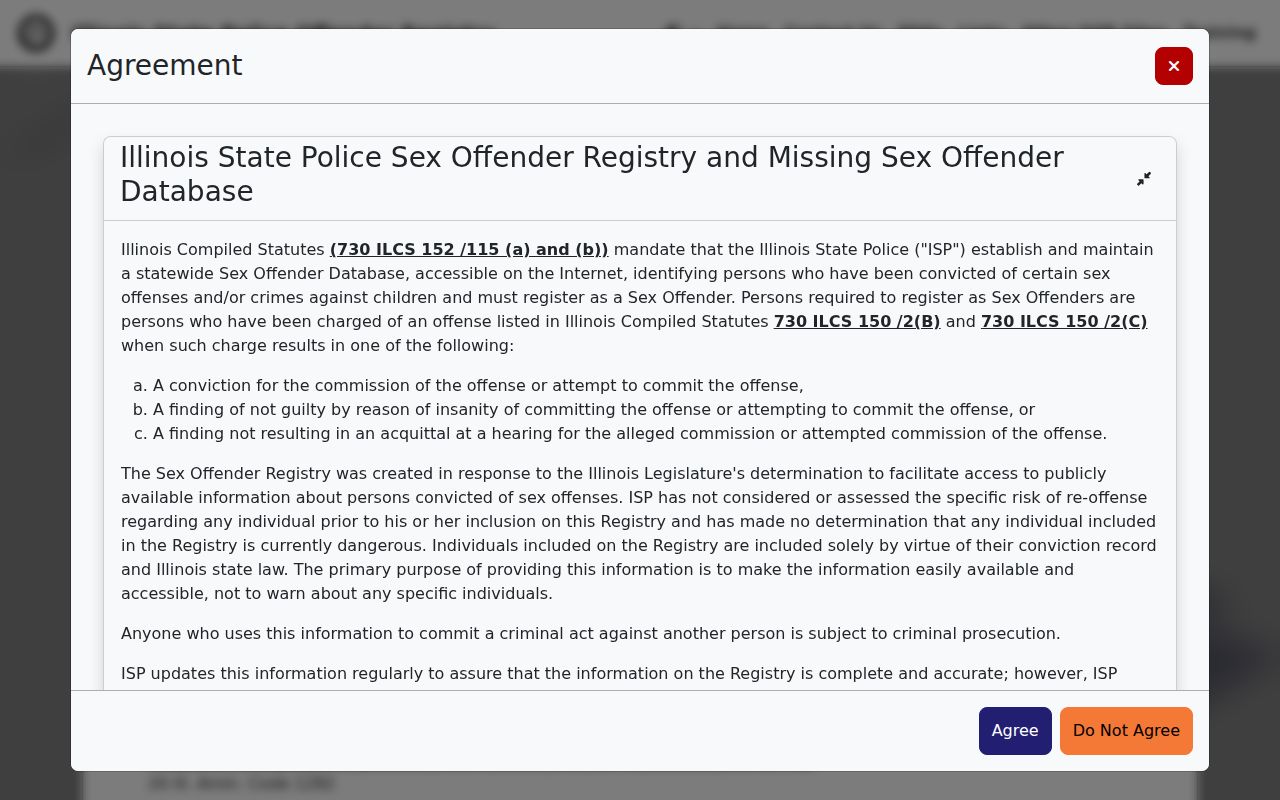
These systems answer narrow public-safety questions. Neither is a broad directory of Lake in the Hills residents, and a result still requires exact identity checks.
Verify Lake in the Hills Records
When the goal is to confirm one person, move from the most stable identifier to a second independent index. A parcel PIN is stronger than an address spelling. A case number is stronger than a shared surname. A certified vital copy is available only through the proper custodian and only when the requester qualifies. Keep uncertainty visible until the records agree.
- Use Athena when the known fact is an address or owner name. Save the PIN, situs, mailing address, legal description, and sale context separately.
- Search the Recorder with the owner as grantee and confirm the deed by PIN or legal description. A mailing address alone is not enough.
- Run the court party search with name variants. Compare case type, filing date, role, and known facts before choosing a docket.
- Use an obituary, yearbook, business filing, license, or eligible vital route to test age, family, school, date, or affiliation.
- Order the exact official copy only after saving its document number, case number, or event details.
A voter match should be used only through the Illinois registration lookup with the person's own identifying details. It is not a browse-all Lake in the Hills resident lookup.
Lake in the Hills Family Trails
Family questions often need a special route. An heir search may begin with an AAPLD obituary or death clue, continue to a 22nd Circuit probate case, and then use recorded deeds or Illinois iCash as leads. Probate can identify an executor or heir, but protected filings and private details should not be copied into a public list.
Illinois adoption records are different. Original files are sealed. The Illinois Adoption Registry and Medical Information Exchange lets eligible adult adoptees, birth parents, adoptive parents, guardians, and some surviving relatives register for voluntary identity or medical-information exchange. The program uses registration, authorization or denial, identification, and medical forms. Research records a $15 charge with stated exceptions, but it is not an open birth-parent index.
For a former classmate, the Algonquin Area Public Library District lists Jacobs High School yearbooks beginning in 1977. Its obituary and newspaper resources include the Cardunal Free Press and Northwest Herald coverage described by the library. Match a school year, class, activity, family name, or dated notice before deciding two names belong to one Lake in the Hills resident.
Confirming Local Business Affiliations
The Illinois Secretary of State entity search accepts an entity name, registered agent, president, secretary, manager, file number, or partial keyword. A File Detail Report can show the official name, formation date, jurisdiction, status, registered agent and office, and named officers or managers. Those facts establish a filing role. They do not establish where a person now lives.
McHenry County Clerk assumed-name records can connect a local trade name to a filer. The Village Public Portal covers selected business and contractor licenses. State credential checks are split again: IDFPR License Lookup handles regulated professions and entities, ISBE handles educator status, and the Secretary of State notary search accepts name, commission number, city, or ZIP. In a resident lookup, use the system that matches the affiliation and preserve its status date.
When Lake in the Hills Search Ends
If no public index answers the question, ask the office for a narrow record rather than a list of residents. Illinois Freedom of Information Act requests should state the record type, address or PIN, case or permit number, date range, desired format, and contact information. The Village routes public-record requests through JustFOIA. Ordinary written requests generally receive a response within five business days, subject to lawful extensions. Restricted vital and court material does not become open merely because FOIA is cited.
Use the counter, phone, mail, or copy-request channel documented by the custodian when an online screen fails. Circuit Clerk staff can explain how to request public documents. County Clerk staff can explain eligibility but do not disclose vital facts by phone. Recorder staff can route searches and copies but will not perform a title search. A precise request is faster and leaves less room for a same-name error.
Note: Ask for segregable, redacted public pages when part of a Lake in the Hills record is lawfully withheld.
Lake in the Hills Lookup Limits
A resident lookup cannot open sealed adoption files, juvenile matters, expunged cases, private vital records, medical or mental-health material, driver's-license addresses, or the centralized voter file. Illinois voter access has strict purpose limits, and the public-view route at the State Board of Elections cannot be used during the twenty-seven days before an election. The self-match portal is the sound route for personal registration confirmation.
Illinois' Address Confidentiality Program provides a substitute address and mail forwarding to qualifying survivors, with four-year enrollment and separate applications for adult household members. It does not erase old public records and does not currently make property records confidential. Court law can also permit a protected petitioner's address to be omitted. A missing address is not proof that the person never lived in Lake in the Hills.
Lawful use. Use Lake in the Hills records for lawful personal research. Never use a result to stalk, harass, threaten, deceive, or intimidate anyone.
Official errors go back to the office that owns the record. Assessments handles parcel and mapping errors. The Recorder handles recorded-document concerns. The Circuit Clerk and court handle dockets. County or state election staff handle voter corrections, while IDPH and the County Clerk route vital corrections. Commercial-profile removal does not change the source record.